Grandpa Joe's Italian Kitchen
  • Home
  • Blogs
  • Recipes
  • Vegetarian Recipes
  • Blog History
  • About
Grandpa Joe's
Pizza Dough

Don't be discouraged by the two days required to make this pizza.  The final result has incredible flavor and texture, so it is worth the extra time!

About this recipe

This pizza dough in this recipe was created especially for wood-fired ovens, which typically cook pizzas in under two minutes at about 1,000° F.  I have discovered, however, that it works equally well using a pizza stone in a conventional oven set at 525° F, but the pizza requires a few extra minutes to cook.

Ingredients (for 4 pizzas)

  • 18 ounces King Arthur's Bread Flour
  • 4 ounces semolina flour
  • 2 teaspoons instant dry yeast
  • 1½  teaspoons kosher salt
  • 1½  teaspoons sugar
  • 14 ounces water
  • 2 tablespoons extra virgin olive oil

Directions - Day 1

  1. Add the water, olive oil, yeast, and sugar to the bowl of an electric mixer.  Add the semolina flour, mix on low speed for several seconds using the dough hook, and then add the salt and about half of the bread flour.  Mix on low speed until the flour is hydrated, about 1 minute.    
  2. When the ingredients are combined fully, add the remaining flour and mix until the dough begins to form a ball.  Continue kneading with the dough hook until the dough pulls away from the sides of the bowl, approximately 5 minutes.  The dough ball should be slightly tacky, but not sticky.  (Steps 1 and 2 also can be completed by hand, albeit with a little extra effort).
  3. Turn out the dough onto a floured surface.  Divide into four 9½-ounce portions and form each portion into a smooth dough ball.  Coat each dough ball lightly with flour and place it in a covered plastic container. 
  4. Refrigerate for 18 to 24 hours before using.  (The dough can be refrigerated for up to 2 additional days.)

Directions - Day 2

  1. Remove the dough balls from the refrigerator about an hour before you plan to make the pizzas. 
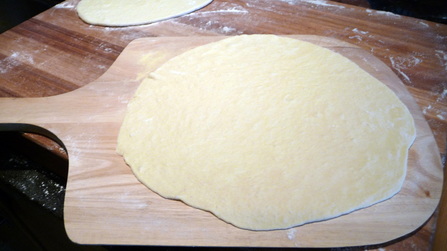
  2. Using your fingertips only (full disclosure: a rolling pin works, too), work each ball to a flat 11-inch circle.  Place the dough on a well-floured wooden pizza peel or on a lightly-oiled pizza pan. 

Notes

  • It is very important to weigh the flours and water.
  • This dough is very elastic and may seem difficult to work at first.  When forming the pizza, either with your fingers or with a rolling pin, work from the center of the dough to the edges – rotating the dough as you work it.  When the dough contracts almost as fast as you work it, let it rest for 1 to 2 minutes.  Work it again, and then let it rest again.  I usually work on four dough balls at a time – moving from one to the next every minute or so.  By the time I have reached the fourth one, the first one is ready to be worked again.
  • If you used a rolling pin (as I frequently do) rather than just your fingers, cover the dough with a pizza pan and let it rest for an hour.  You will be amazed at what happens in that short time.
  • You can also use a cookie sheet (typically about 17 by 12 inches) for your pizza.  Just use two dough portions. Generously oil the pan and work the dough from the center of the pan out using your hands and fingers.  Sheet pizzas should be baked at 475° F for about 20 minutes, or until the crust is clearly golden brown and delicious.
  • Please note that this recipe has been optimized for King Arthur's Bread Flour.  Other bread flours will work equally well, but more or less water may be required.
  • Be sure to record the total baking time when you try this recipe with a pizza pan .  This time will likely be constant for your oven for all future pizzas.
Picture
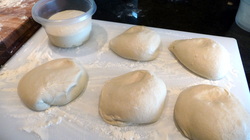
Pizza Dough on the second day.  Note the plastic storage container used to refrigerate the dough overnight.
Picture
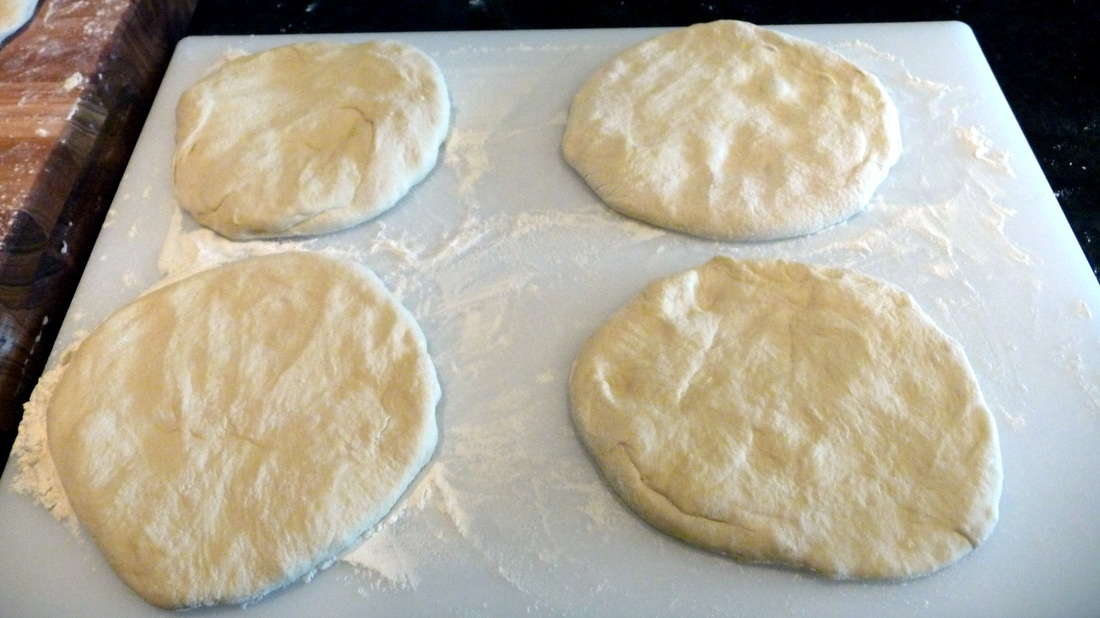
A work in progress!

Picture
Ready for toppings and the oven.

Picture
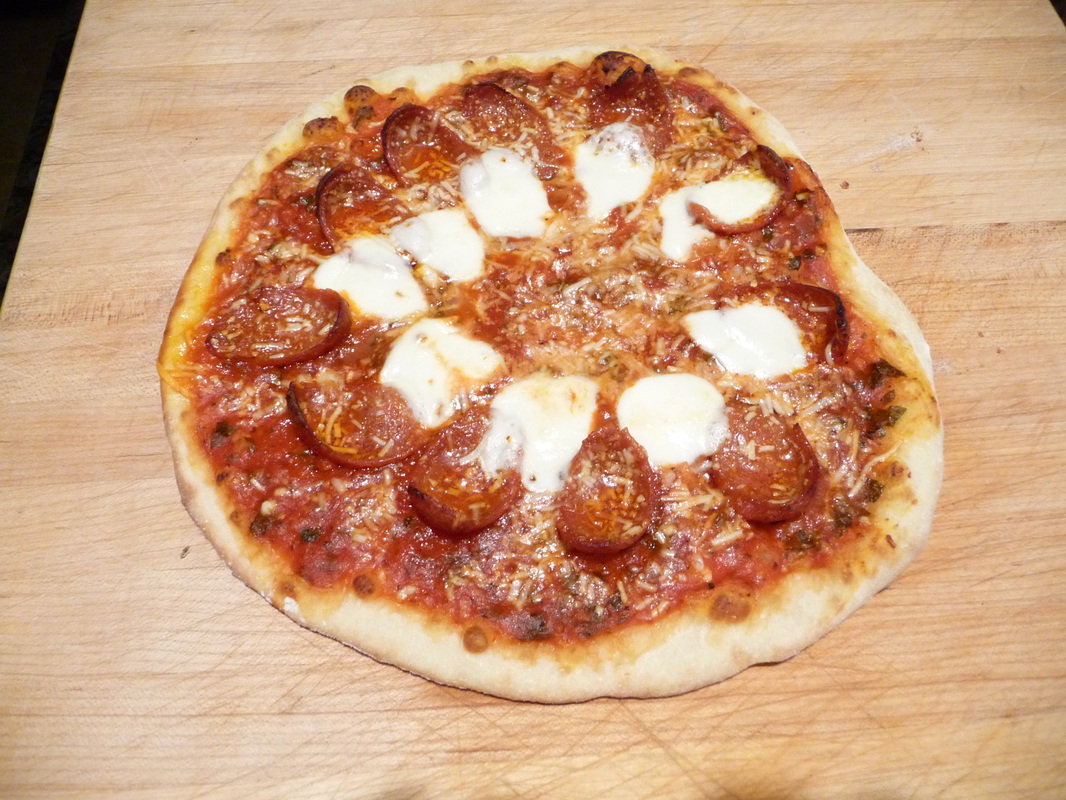
Oven-baked pizza with my family's Pizza Sauce, pepperoni, and fresh mozzarella and pecorino Romano cheeses.
Picture
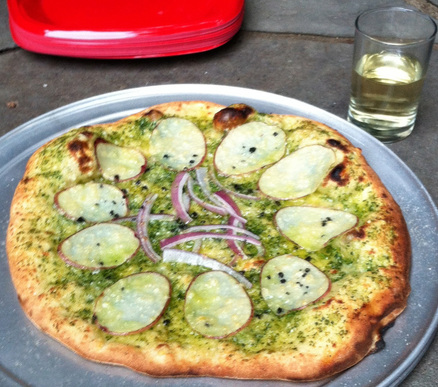
Wood-fired oven pizza with sliced red potatoes and red onions over basil pesto, topped with Parmigiano-Reggiano cheese and black lava salt.

Posted: January 2014.